Why does our project exist?
Desert bighorn sheep (Ovis canadensis nelsoni) are a subspecies of bighorn sheep that occur throughout the southwestern U.S. and into Mexico. They've had a rocky relationship with humans as the West was developed and overall the range of bighorn sheep has shrunk during the 19th and 20th centuries. Certain populations are federally listed as endangered (Peninsular desert bighorn sheep) and others are currently protected and managed state-by-state.
Management challenges
In California, managers, researchers, and non-profit groups have put in decades of effort to restore bighorn populations and make them more resilient to current and future threats. But the effort is far from over.
|
Climate change, introduced diseases, habitat loss and fragmentation, and competition with introduced species are all interacting threats that affect the health and long-term stability of bighorn populations.
In order to make science-informed decisions that help desert bighorn thrive in Southern California, we maintain an active program of research and monitoring. |
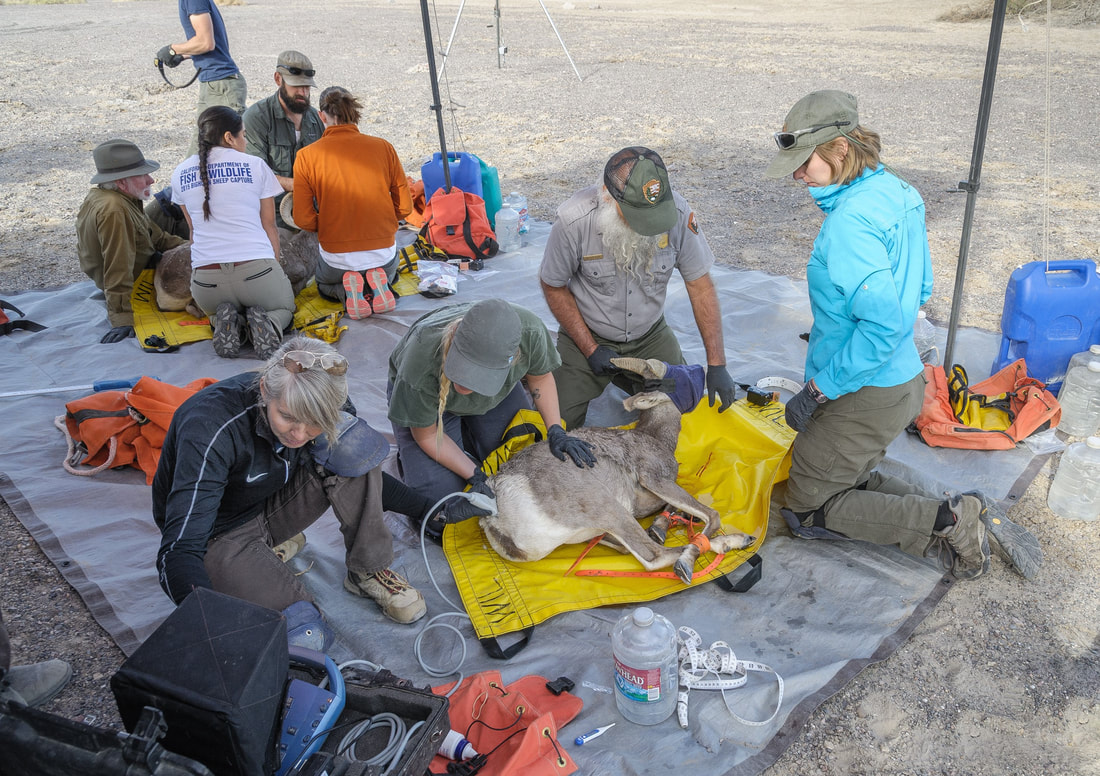
Photo: Birgitta Jansen (NPS)
|
Why focus on connectivity?
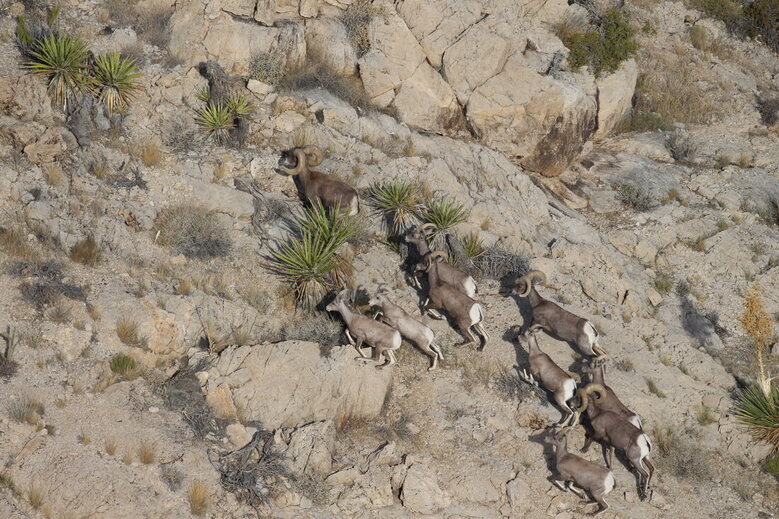
Photo: Regina Abella (CDFW)
|
Desert bighorn sheep habitat is made up of mountain ranges and smaller patches of rocky terrain. These areas seem like isolated islands among a sea of open desert, but bighorn sheep can move across large areas with ease. In an ecosystem with so few resources, bighorn make use of many habitat patches to access resources, evade predators, and interact with their neighbors. They behave and function as a metapopulation - a collection of connected populations. The seemingly isolated desert mountains actually form a network of habitat that helps bighorn populations stay connected.
|
Keeping connected becomes complicated
|
After bighorn disappeared from many areas, a combination of management actions and natural movement between connected areas allowed bighorn to reestablish populations in some mountain ranges.
|
But highways, canals, and other growing developments across the desert limit bighorn's ability to move freely across their habitat. This makes it harder for bighorn sheep to adapt to and rebound from new challenges moving forward.
|
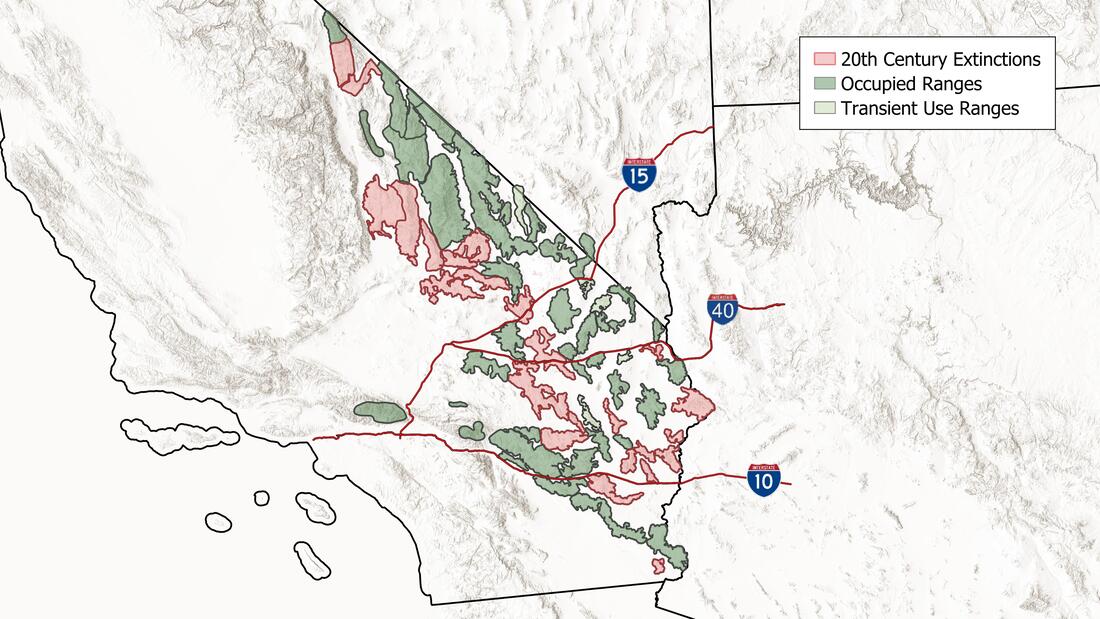
Map of the CA mountain ranges that lost their resident desert bighorn populations in the 20th century (Peninsular bighorn not shown). Thanks to population management and natural movements, some of these areas have been recolonized by bighorn
|
Want to learn more? |
Watch our NPS Connected Conservation webinar on bighorn ecology, habitat fragmentation, and on-going projects!
|
